
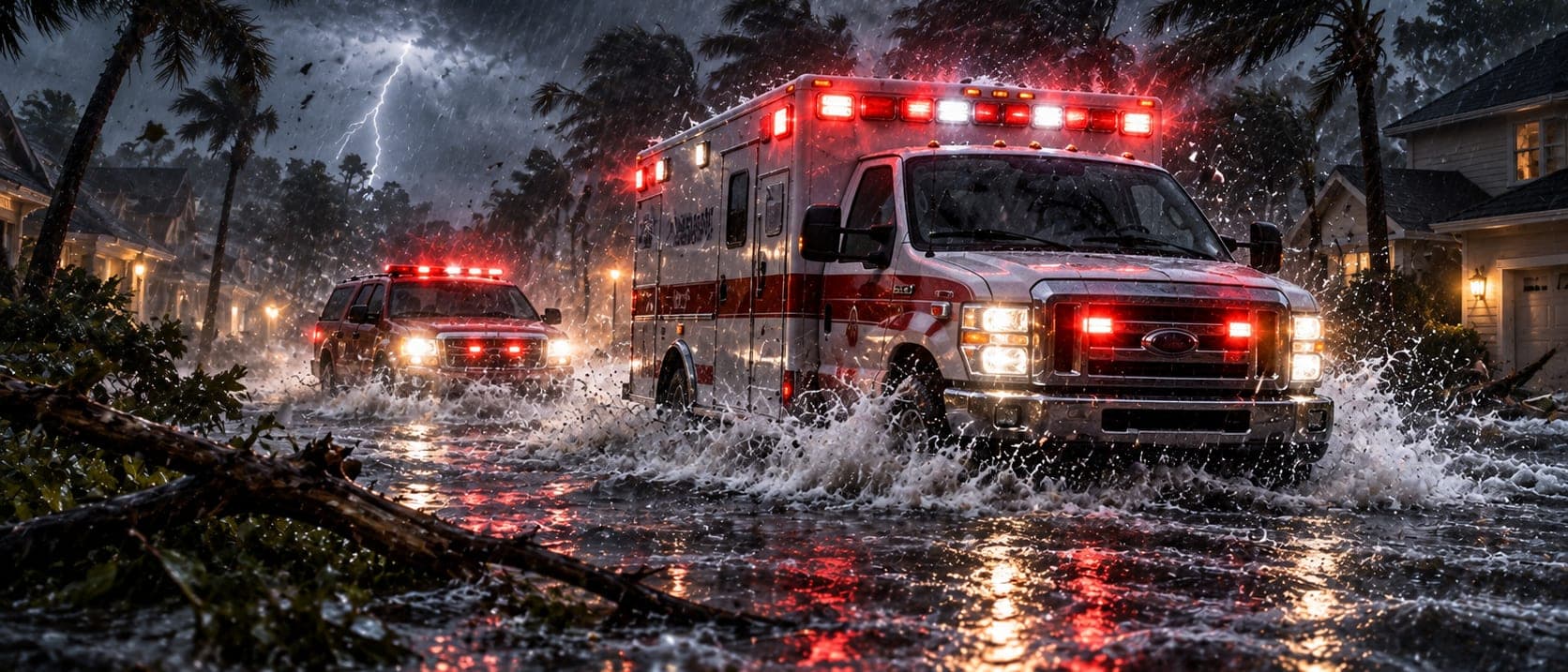
Emergency services: what's next
For the people who
drive toward it.
WHIP MK I is licensed to individuals, so a firefighter, EMT or responder can build one for their own vehicle today. Departments are next: tell Ken what your department would need.
Today
WHIP MK I is licensed for personal or household use. A firefighter or EMT can license it for their own vehicle, one door at a time.
Next
Departments are not offered WHIP yet, and nothing on this page is an offer. Telling Ken what you would need helps decide what comes next.
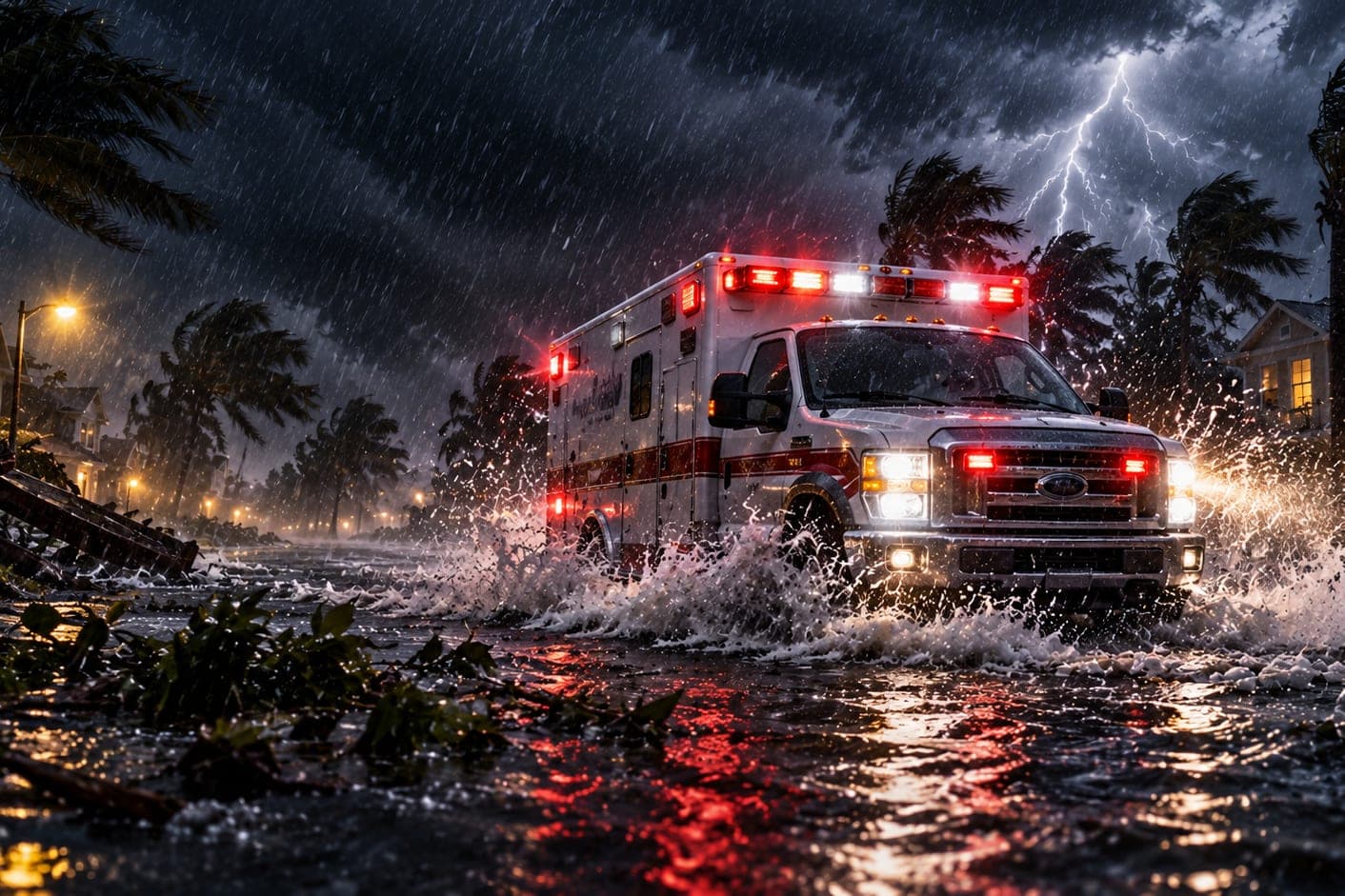
EMS and ambulance services
You go out in it so someone else gets through it.
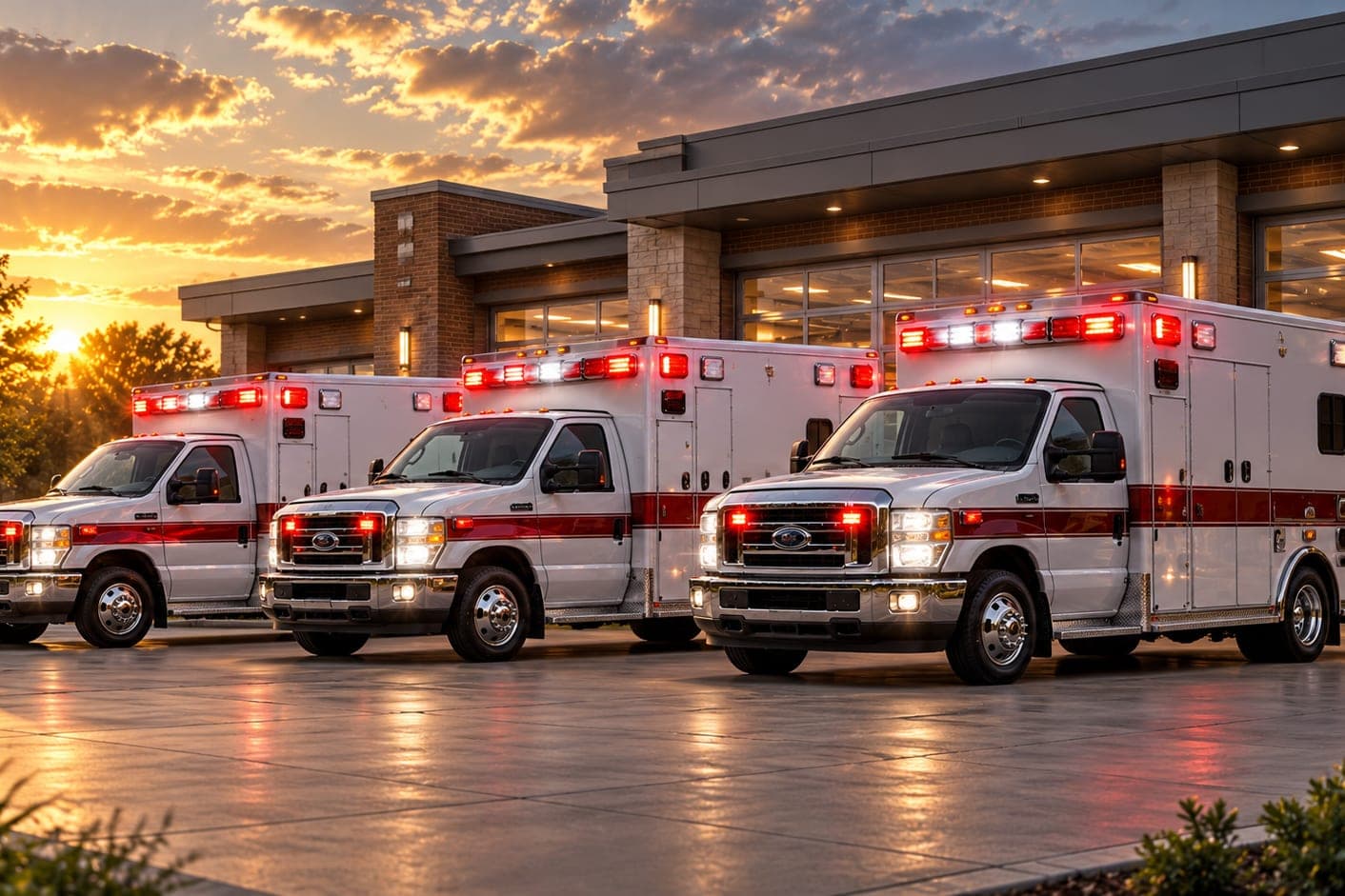
An ambulance does not wait for the weather to pass. When the tones drop in the middle of a hail warning, the crew goes, and the unit takes whatever the sky throws while they work the call.
Imagine every unit leaving the station with a clear guard on each door window, hung over the frame with the doors latched and nothing on the vehicle changed. That is the conversation Ken wants to have with EMS services.
- Storm protection that rides with you
- On at the station, off when the sky clears
- Nothing drilled, bolted or stuck to the vehicle
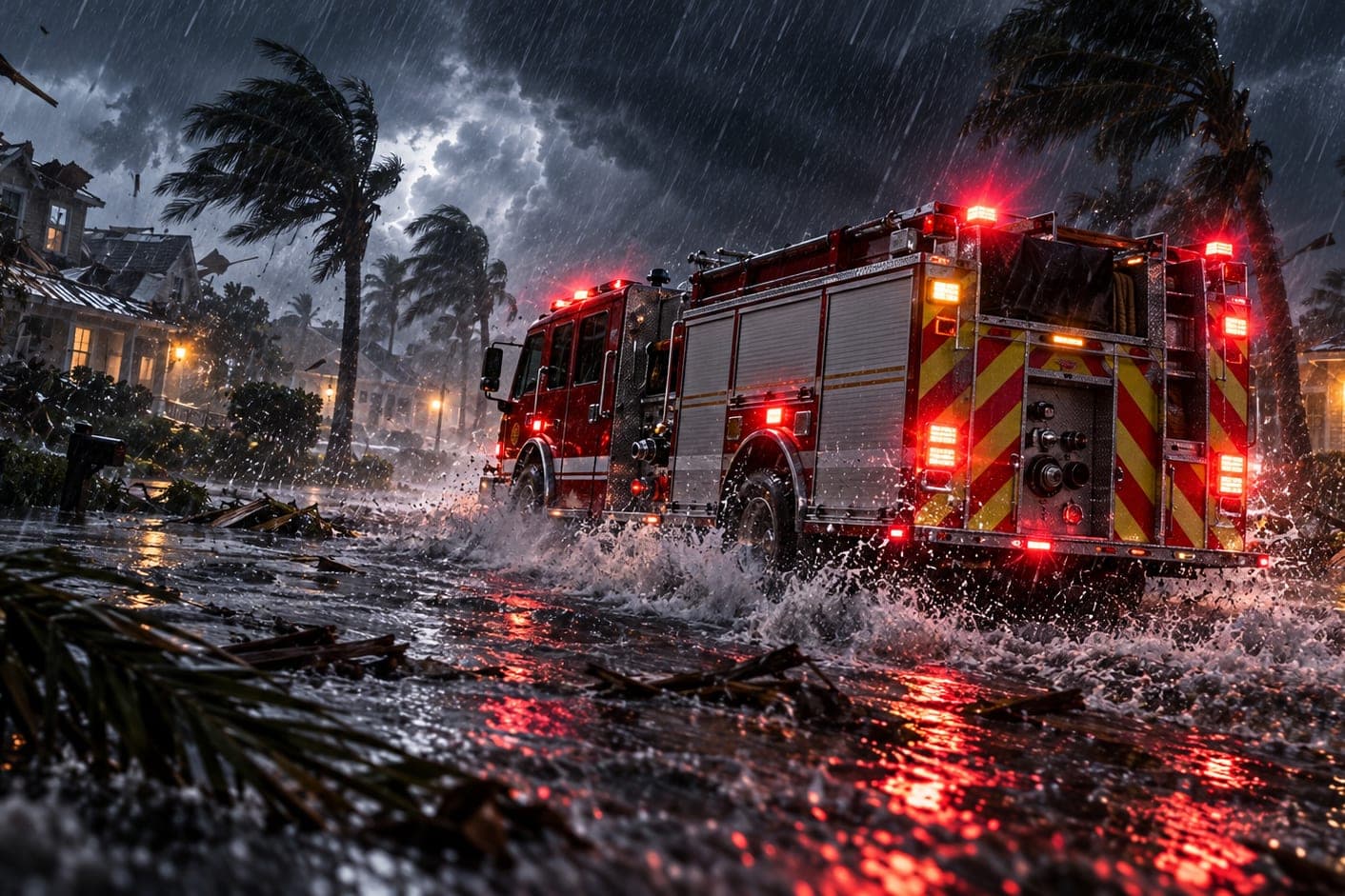
Fire and rescue
First through the debris, last back to the station.
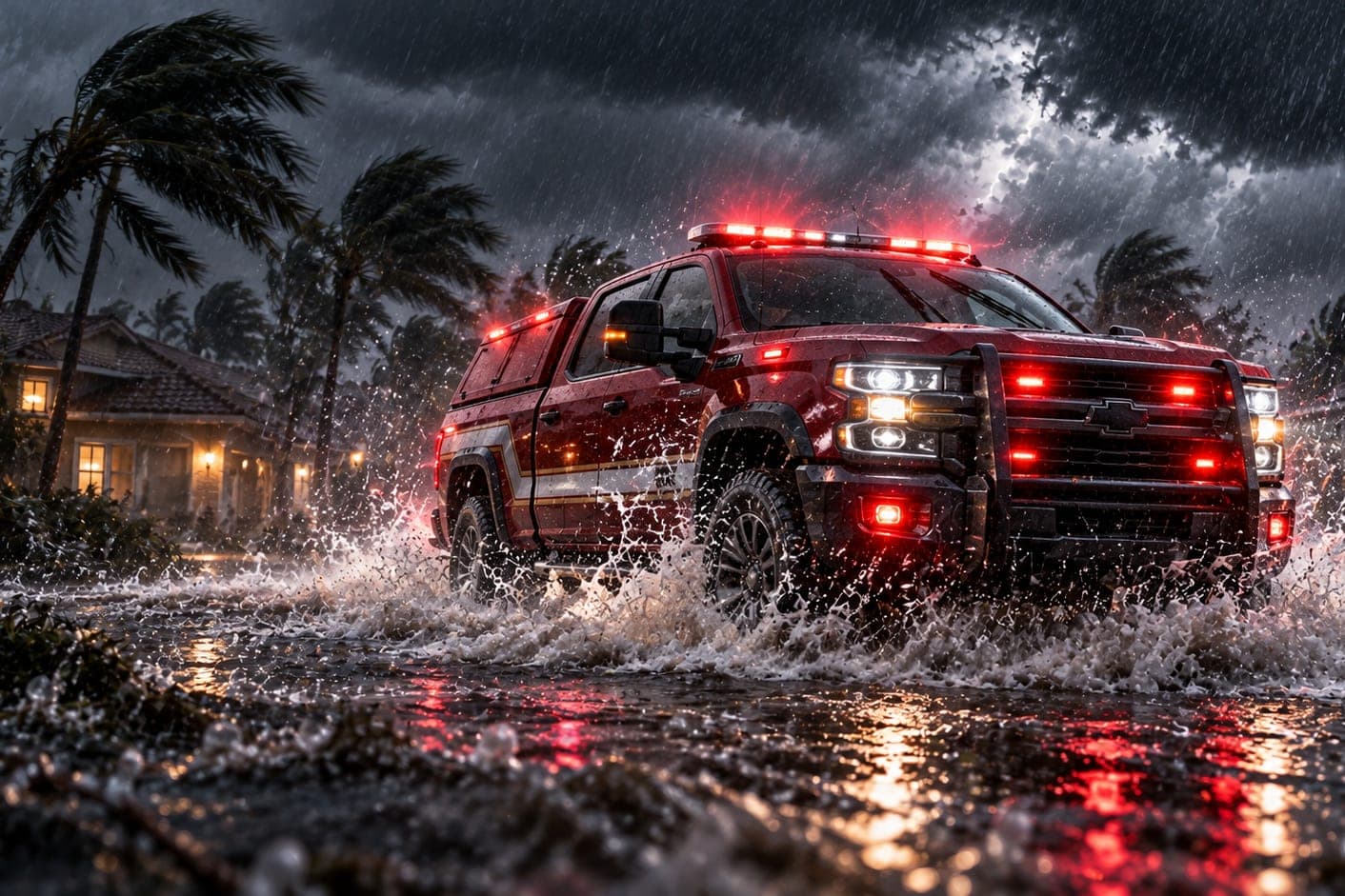
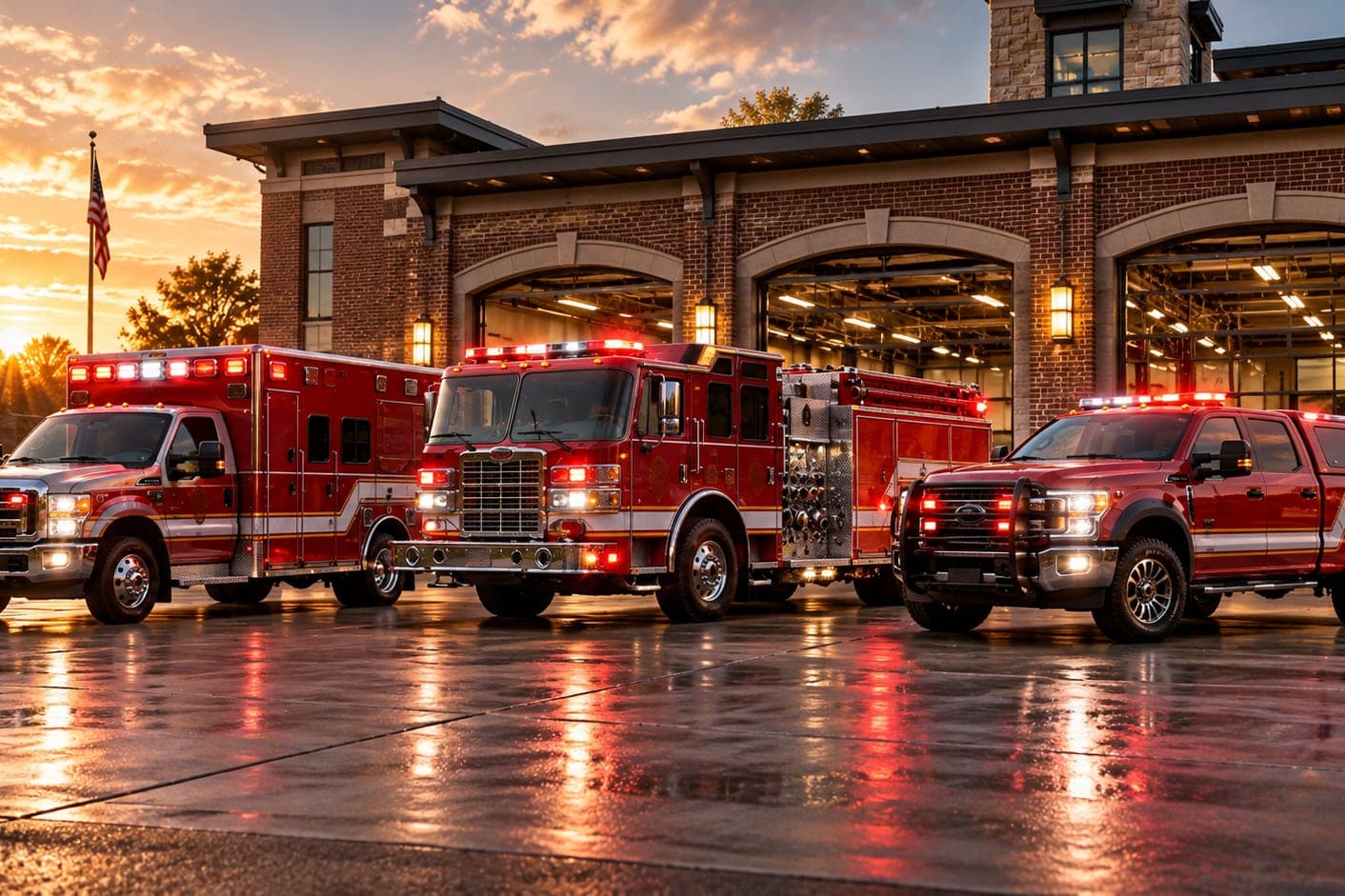
Engines roll into the storm while it is still falling, and the crews step out of them into it. Behind the engine come the vehicles that run all night after the storm: the command SUV, the brush truck, the utility pickup.
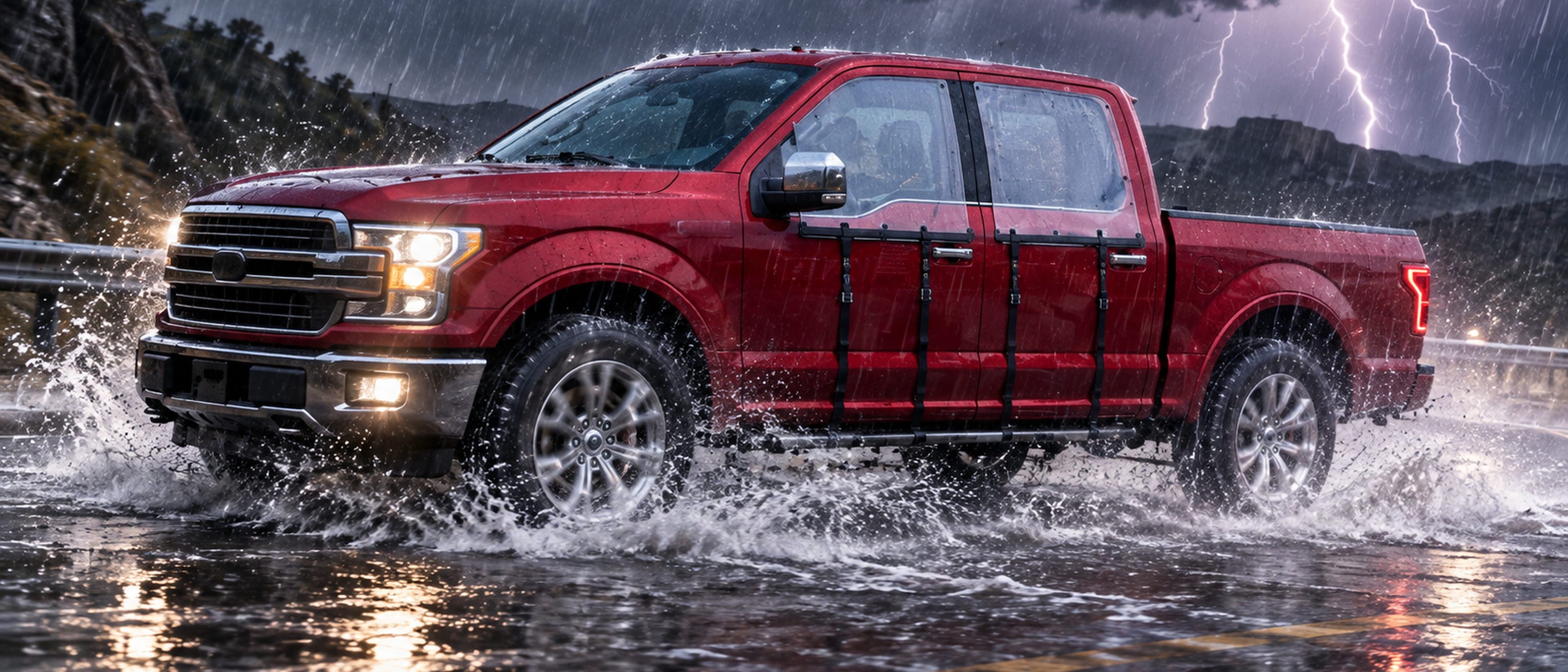
Those light vehicles are the ones WHIP fits: doors with three straight outer edges, like the pickup in the build document's own example. A firefighter can license MK I and build WHIP for their own truck today; a department version is what comes next.
- Command SUVs, brush trucks and utility pickups
- Doors with three straight outer edges
- Built from the licensed document, one door at a time
Emergency management
You planned for this storm before it had a name.
Emergency managers spend the season staging: fuel, generators, shelters, and the vehicles that carry command into the field. The plan is only as good as the equipment that comes through the first hour intact.
Picture WHIP as a line in the storm plan: guards on the command and support vehicles when the watch is issued, off when the roads open. If that is a line you would write, tell Ken.
- Command, logistics and support vehicles
- Fits a watch-and-warning checklist
- A serial-numbered certificate on every panel
Search, rescue and storm response
When the water comes up, you go in.
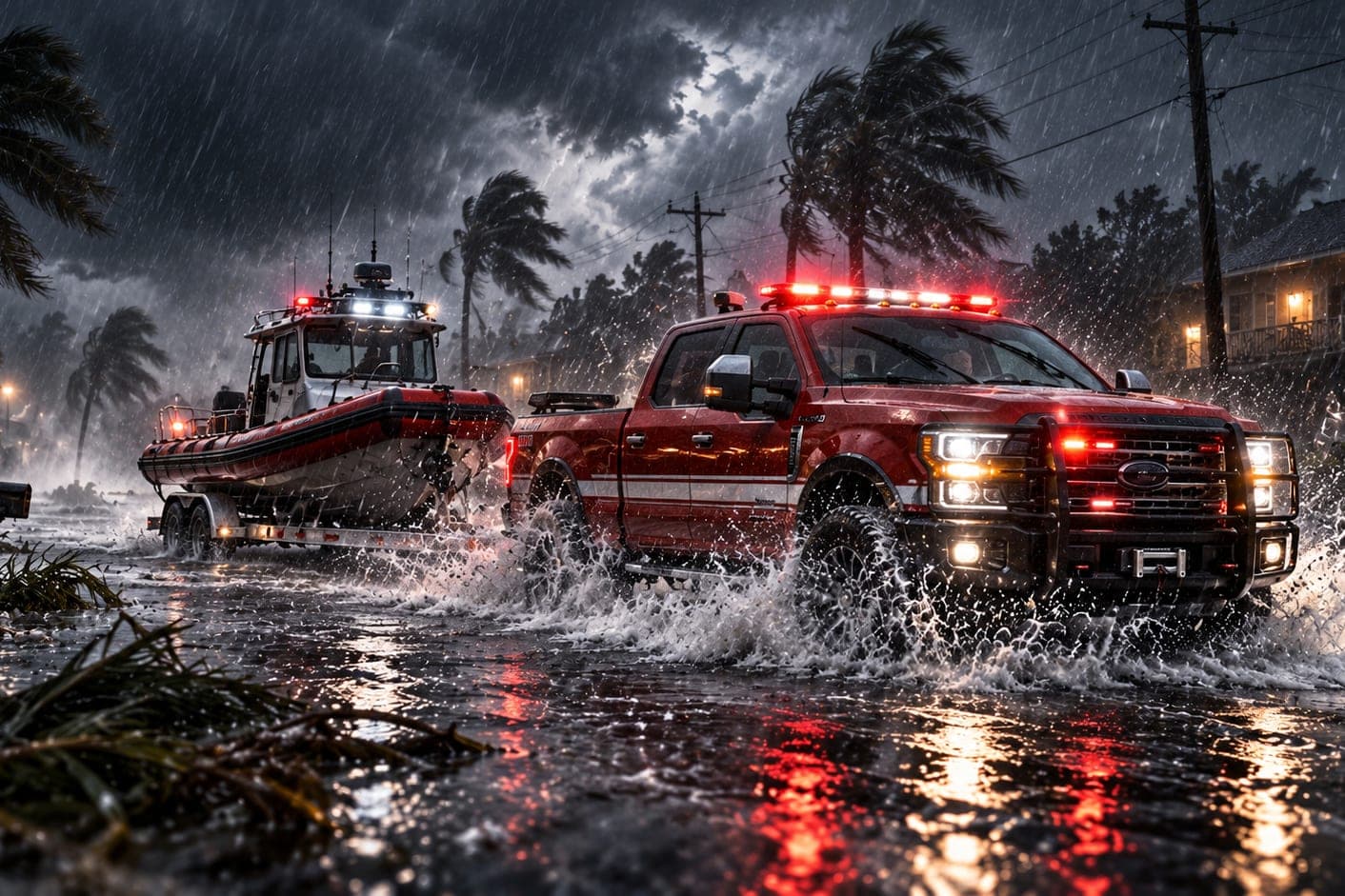
Swiftwater teams and storm response units work in the hours when the weather is still throwing things, towing boats and running generators down streets full of debris.
The truck that pulls the boat has to make the next trip too. WHIP is built to stay on the closed door through high-wind weather and to take hail and storm debris before the window glass does.
- Tow vehicles and crew pickups
- Hail and windborne storm debris
- Stores in its own bag between calls
Protects most of the door window from hail and windborne storm debris. Not bullet resistant. Not wind rated. The pictures on this page show the vehicles WHIP could serve, not the guard itself.
Pass it on
Know a chief, a captain or a coordinator?
Send them this page. Every service that tells Ken what it would need shapes what WHIP becomes for departments.
Tell Ken what you needThis is not an order or a quote request, and nothing is charged here. It tells EVAC which services want WHIP and what they would need.
Imagine every unit covered